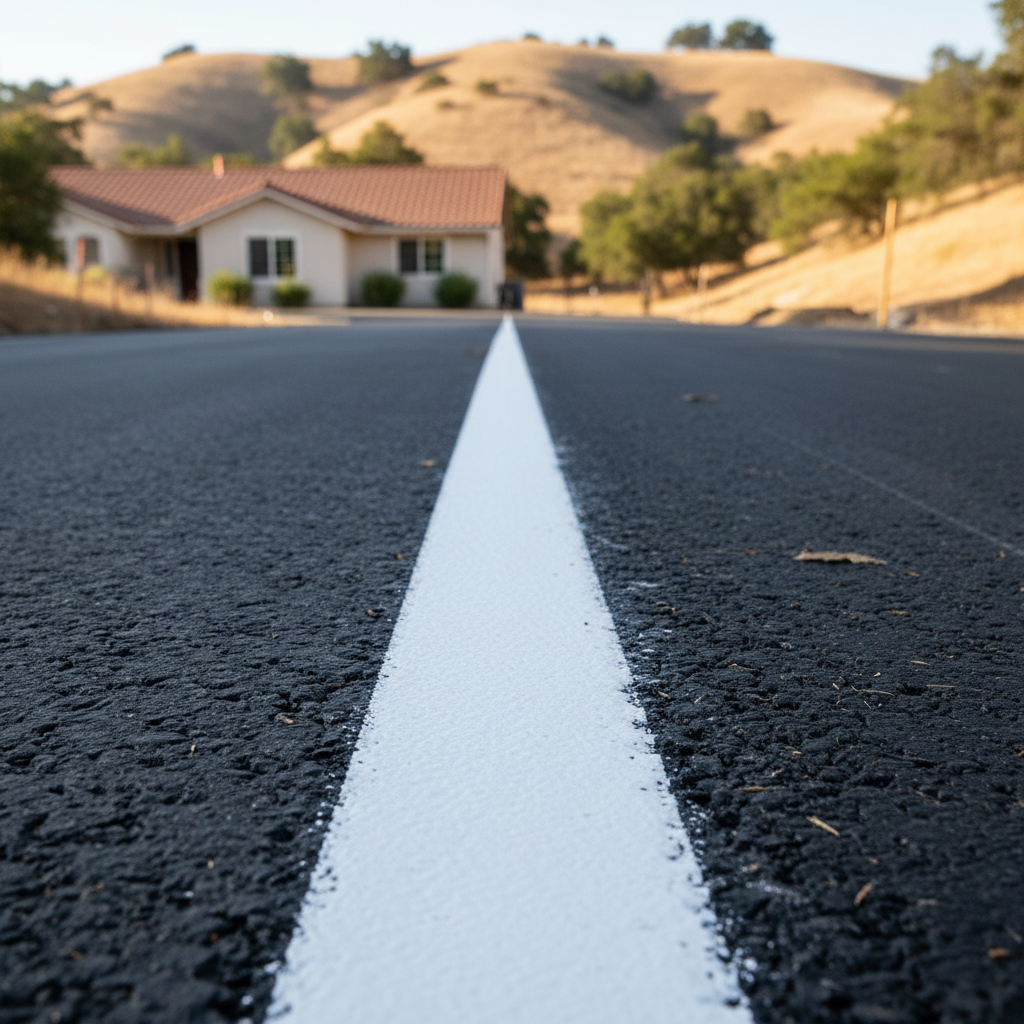
You've got a driveway, a parking area, or maybe even a private road on your property here in Los Altos. And if it's asphalt, at some point, you're going to think about striping. Maybe it's faded, maybe you want to reconfigure parking, or maybe you're just wondering what's involved. I get a lot of the same questions from homeowners around here, so let's tackle them head-on.
How long does asphalt striping actually last?
That's probably the most common question I hear. The honest answer is, it depends on a few things. First, the quality of the paint makes a huge difference. You can buy cheap stuff, but it'll fade and chip way faster. We always use high-grade, durable traffic paint that's designed to withstand heavy use and weather. Second, traffic volume is a big factor. A rarely used private driveway will hold its stripes much longer than a parking area that sees dozens of cars daily. Third, weather plays a role. Our Los Altos sunshine is great, but UV rays can break down paint over time. Rain, especially heavy downpours that wash away loose debris, also contributes to wear. Generally, you can expect good quality striping to last anywhere from 1 to 3 years before it starts looking tired and needs a refresh. Some areas might get 4 or 5 years if they're low-traffic and well-maintained.
Do I need to sealcoat my asphalt before striping?
Absolutely, yes. This is a critical step that often gets overlooked or skipped to save a few bucks, but it's a mistake. Think of sealcoating as preparing the canvas. If you stripe directly onto old, unsealed asphalt, the paint won't adhere properly. The surface is likely porous, cracked, and has loose aggregate. The sealcoat creates a fresh, smooth, dark surface that the striping paint can bond to much better. It also makes the colors pop more vividly. If you stripe first and then sealcoat, you'll just cover up your fresh lines. So, the order is always: repair (if needed), clean, sealcoat, and *then* stripe. You'll get a much longer-lasting and better-looking result, I promise you.
What kind of paint do you use for striping? Is it safe?
We use professional-grade acrylic traffic paint. It's specifically formulated for asphalt and concrete surfaces. It's designed to be durable, fade-resistant, and quick-drying. Most modern traffic paints are water-based, which means they're much safer for the environment and for people than the older, solvent-based paints. They have low VOCs (Volatile Organic Compounds), so you don't get those harsh fumes. Once it's dry, it's completely safe for vehicles and pedestrians. We always make sure to use products that meet or exceed industry standards for safety and performance.
How much does asphalt striping cost?
This is tough to give a one-size-fits-all answer because it varies so much. It depends on the size of the area, the number of lines, arrows, or stencils needed, and the condition of the existing surface. Are we just re-striping over existing lines, or do we need to lay out a completely new pattern? New layouts take more time for measuring and chalking. Also, if there's old, flaking paint that needs to be removed first, that adds to the labor. Generally, we charge per linear foot for lines and per stencil for things like handicap symbols or 'STOP' messages. The best way to get an accurate price is to have us come out and take a look. We'll give you a clear, written estimate so you know exactly what to expect from Neighborly Asphalt Inc.
How long does it take for the paint to dry? Can I drive on it right away?
Modern traffic paints dry remarkably fast. In good weather conditions – meaning it's not too cold or humid – the paint is usually touch-dry within 15-30 minutes. However, 'touch-dry' isn't 'ready for heavy traffic.' We typically recommend waiting at least an hour, and preferably 2-4 hours, before driving or parking vehicles on fresh stripes. This gives the paint enough time to cure properly and avoid tracking. If it's a cooler day or if there's high humidity, it might take a bit longer. We'll always advise you on the specific drying times based on the day's conditions when we're on site.
Can you stripe on an uneven or cracked asphalt surface?
You can, but I wouldn't recommend it. Striping on an uneven or cracked surface is like painting a wall that's falling apart. The lines won't look crisp and straight, and the paint will wear out much faster because it's not adhering to a stable base. Cracks will show through, and if the asphalt continues to deteriorate, the paint will chip and peel right along with it. Before any striping, we always inspect the asphalt. If there are significant cracks or potholes, we'll suggest repairs first. A smooth, well-maintained surface is key to getting striping that looks good and lasts. For instance, some of those older properties up near the Los Altos Hills with steeper, winding driveways often have more wear and tear, and those areas definitely benefit from repairs before striping.
Hopefully, that clears up some of your questions about asphalt striping. It's a small detail that makes a big difference in the look and functionality of your property. If you've got more questions or want to get an estimate for your place, just give us a call at Neighborly Asphalt Inc. We're happy to help you out.